What if the most frightening moment of your life was actually a signal from your child’s body that, once understood, could lead to a clearer path forward? Watching your child experience a seizure is an overwhelming event that often leaves parents feeling helpless and consumed by worry. You might find yourself searching for answers late at night, wondering if you missed a subtle warning sign or if this single event means a lifelong diagnosis of epilepsy. It’s completely natural to feel confused by complex medical terms and fearful of what the future holds for your family.
Our goal is to help you understand what causes seizures in children by distinguishing between temporary environmental triggers and underlying neurological conditions. By identifying the specific “why” behind these episodes, you can move from a place of uncertainty to one of informed advocacy for your child’s neurological health. We will explore how specialists evaluate these events, the common factors that can lower a child’s seizure threshold, and the diagnostic steps used to provide a clear roadmap for management and care.
Key Takeaways
- Learn why seizures are often described as a temporary “electrical storm” in the brain and how this activity affects your child’s neurological function.
- Discover the critical difference between immediate triggers like high fevers and the underlying medical conditions that define what causes seizures in children.
- Understand the distinction between provoked and unprovoked seizures to help determine if your child requires long-term epilepsy management.
- Find out why an Electroencephalogram (EEG) is considered the gold standard for diagnosing brain wave activity and how your detailed observations assist the process.
- Explore the benefits of a personalized outpatient care model for managing chronic neurological conditions in a supportive, community-focused environment.
The Science of Seizures: How Brain Activity Changes
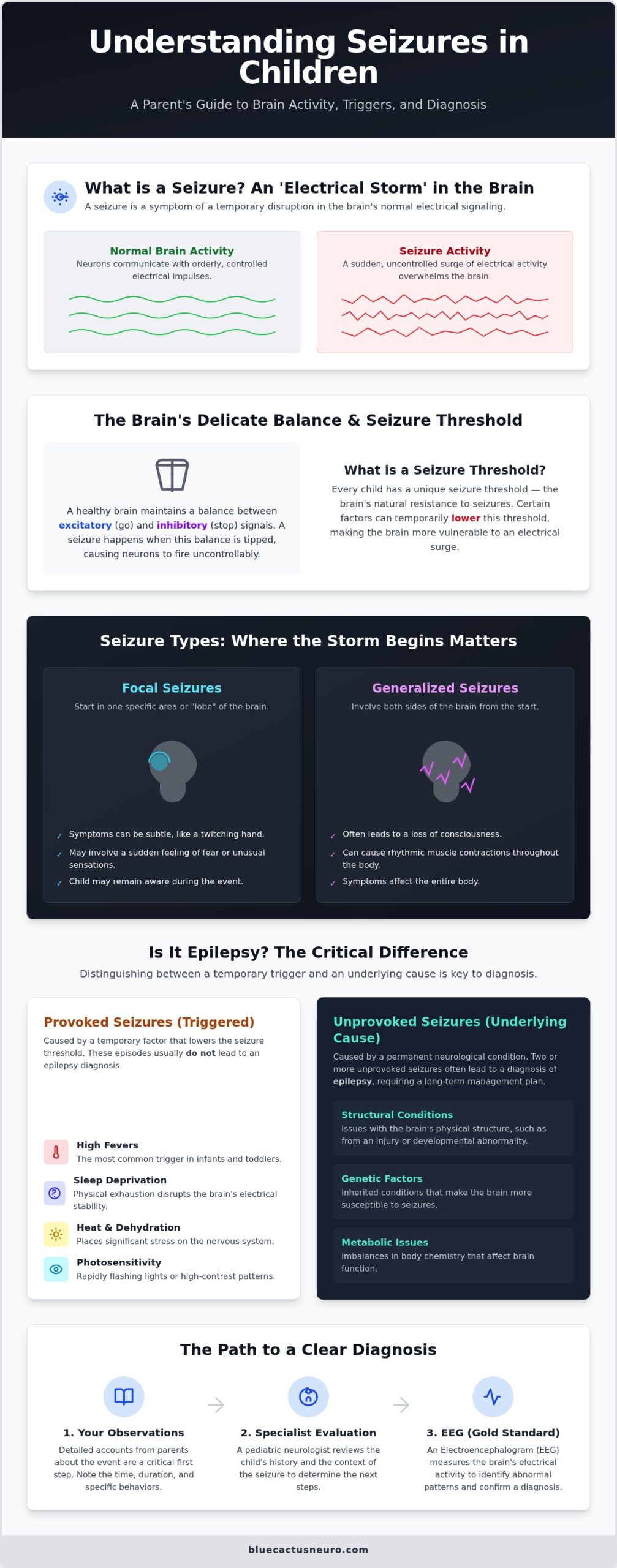
The human brain is a complex network of billions of nerve cells, or neurons, that function as the body’s control center. These neurons communicate through tiny electrical impulses that travel along specific pathways to manage everything from muscle movement to emotional responses. In a healthy brain, these electrical signals are orderly, controlled, and well-timed. However, a seizure occurs when there’s a sudden, temporary surge of electrical activity that disrupts this normal flow. You can think of this event as a brief “short-circuit” or an “electrical storm” that overwhelms the brain’s typical communication patterns.
When these abnormal signals take over, they temporarily interrupt normal motor, sensory, or cognitive functions. This disruption is why a child might experience involuntary movements, a change in awareness, or unusual sensations. It’s helpful to remember that a seizure is a symptom of an underlying issue rather than a disease itself. Just as a fever indicates the body is fighting an infection, a seizure is a visible sign that the brain’s internal signaling system is experiencing a temporary disturbance.
Neurons and Electrical Balance
Maintaining a steady neurological environment depends on a delicate balance between different types of chemical messengers called neurotransmitters. Some neurotransmitters are “excitatory,” meaning they encourage electrical activity, while others are “inhibitory,” serving to calm or stop it. A seizure typically happens when the excitatory signals overwhelm the inhibitory ones, causing neurons to fire uncontrollably and in unison. Every child has a unique “seizure threshold,” which is the brain’s natural resistance to this abnormal electrical activity. When we investigate what causes seizures in children, we often look for factors that may have lowered this threshold, making the brain more vulnerable to an electrical surge.
Focal vs. Generalized Brain Activity
The outward symptoms of a seizure depend entirely on where the electrical disturbance is located. Focal seizures begin in one specific area or “lobe” of the brain. Because the activity is localized, the symptoms might be subtle, such as a twitching hand or a sudden feeling of fear. In contrast, generalized seizures involve both sides of the brain from the start, which often leads to a loss of consciousness or rhythmic muscle contractions throughout the body. Understanding these patterns is a vital step in the diagnostic process. To help you identify the specific behaviors your child is exhibiting, you can refer to our Signs of Seizure Disorders in Children: A Comprehensive Parent’s Checklist.
Immediate Triggers vs. Long-Term Neurological Causes
Distinguishing between an immediate trigger and an underlying cause is one of the most important steps in pediatric neurology. To understand what causes seizures in children, we must look closely at the context of the event. A “trigger” is a temporary external factor or physical state that lowers a child’s seizure threshold, provoking an episode that might not have happened otherwise. In contrast, a “cause” refers to a permanent structural, genetic, or metabolic condition within the brain itself. Most one-time triggers don’t lead to a diagnosis of epilepsy, which is why a thorough investigation is essential to provide parents with peace of mind.
Identifying this difference allows us to create a tailored management plan. If a child’s seizure was provoked by a specific, avoidable trigger, the focus may be on lifestyle adjustments rather than long-term medication. However, if the root cause is a structural or genetic condition, we shift our approach toward consistent medical management to protect the child’s developing brain. This methodical approach ensures we aren’t just treating a symptom, but rather supporting the whole child.
Common Environmental and Physical Triggers
Many childhood seizures are provoked by temporary physiological stress. High fevers are the most frequent trigger for infants and toddlers, often resulting in what are known as febrile seizures. You can learn more about managing these common events in our Febrile Seizures in Toddlers: A Parent’s Guide. In our local Scottsdale and Phoenix communities, environmental factors like extreme heat and dehydration can also place significant stress on a child’s nervous system, potentially lowering their seizure threshold.
- Sleep Deprivation: Physical exhaustion is a powerful trigger that can disrupt electrical stability in the brain.
- Photosensitivity: Rapidly flashing lights or specific high-contrast visual patterns can provoke episodes in certain children.
- Metabolic Shifts: Sudden drops in blood sugar, also known as hypoglycemia, can trigger a seizure even in a brain with no underlying condition.
Underlying Biological and Structural Causes
When seizures occur without an obvious external catalyst, we look closer at the brain’s biology. Some children have a genetic predisposition that makes their neural “wiring” naturally more excitable. Other causes are structural, such as brain malformations, tumors, or scar tissue from a previous head injury. We also specialize in managing seizures stemming from birth-related complications like Hypoxic Ischemic Encephalopathy (HIE) or neonatal brain injuries. If you are concerned about recurring symptoms, a specialized neurological evaluation can help pinpoint the exact nature of these events and provide a clear path forward for your family.
Is it Epilepsy? Understanding Provoked vs. Unprovoked Seizures
When a child has a seizure, the first question parents ask is often, “Does my child have epilepsy?” To answer this, we look closely at the circumstances surrounding the event. A “provoked” seizure is directly caused by an immediate, identifiable factor, such as a high fever, head trauma, or a severe metabolic imbalance. Conversely, an “unprovoked” seizure happens without any clear external catalyst. In the clinical world, epilepsy is typically defined as a child having two or more unprovoked seizures occurring more than 24 hours apart.
It’s vital to understand that a single seizure doesn’t automatically mean your child has a chronic condition. In fact, many children experience one isolated episode and never have another. While the experience is frightening, it’s often a one-time reaction to a specific stressor rather than a permanent neurological change. Our role is to help you navigate these definitions so you can feel confident in your child’s long-term health plan.
The Role of the Seizure Threshold
Every person has a “seizure threshold,” which is essentially the brain’s internal resistance to abnormal electrical activity. Some children are naturally more susceptible to seizures during a common illness because their threshold is lower than others’. When exploring what causes seizures in children, we find that provoked events are managed quite differently than chronic epilepsy. For a provoked seizure, we focus on treating the underlying trigger, like the infection causing a fever. A pediatric neurologist plays a key role here, evaluating your child’s history to determine the statistical likelihood of another episode occurring. Working with a trusted child seizure specialist Arizona families can rely on ensures this evaluation is thorough and tailored to your child’s unique neurological profile.
When a Single Seizure Leads to a Diagnosis
While the “two-seizure” rule is the standard, there are instances where a single unprovoked event leads to an earlier diagnosis. This happens when certain risk factors suggest a high probability of recurrence. For example, if an initial Electroencephalogram (EEG) shows specific abnormal brain wave patterns, it indicates that the brain’s “wiring” is predisposed to future electrical storms. Early evaluation is critical because it allows us to identify these risks before a second event occurs.
For more detailed information on this process, you can read our Childhood Epilepsy Diagnosis: Guide for Arizona Parents. Taking this proactive step helps ensure your child’s safety and provides a structured plan for their ongoing neurological health. By understanding these risks early, we can work together to minimize disruptions to your child’s daily life and development.
The Role of Specialized Testing in Finding the Cause
The diagnostic journey begins with you. While medical technology is advanced, your detailed account of what happened during an episode is often the most valuable piece of the puzzle. When we evaluate what causes seizures in children, we rely heavily on the clinical history you provide. Observations about how long the event lasted, what your child’s movements looked like, and their state of mind afterward help narrow down the possibilities. We encourage parents to record videos of any recurring episodes if it’s safe to do so, as these recordings offer vital clues that testing alone might miss.
Beyond the clinical history, we use advanced imaging and laboratory work to look for physical evidence. Magnetic Resonance Imaging (MRI) or Computed Tomography (CT) scans allow us to see the brain’s physical structure. These tools help us identify lesions, malformations, or scar tissue that could be the root cause of the electrical activity. In cases where the cause remains “idiopathic” or unknown, we may recommend metabolic or genetic testing. These specialized labs can reveal subtle chemical imbalances or genetic markers that predispose a child’s brain to seizures.
What an EEG Tells Your Neurologist
The Electroencephalogram (EEG) is the gold standard for measuring the brain’s electrical activity. By placing small sensors on the scalp, we can see the “rhythm” of the brain waves and identify any spikes or abnormal patterns. This test helps us distinguish between different seizure types and determines if the activity is localized or widespread. A routine EEG usually lasts about 30 to 60 minutes, but if we need a more comprehensive view, we might use an ambulatory EEG. This multi-day test records brain activity while your child goes about their normal routine at home, increasing the chances of capturing an event. A normal EEG does not always rule out a seizure disorder, so we interpret these results alongside your child’s full clinical picture.
Why Specialized Pediatric Expertise Matters
A child’s brain isn’t just a smaller version of an adult brain; it’s a rapidly developing organ with its own unique electrical signatures. General pediatricians are excellent at identifying when something is wrong, but they often refer families to a pediatric neurologist for specialized interpretation. We take a “pediatric-first” approach, ensuring that we account for age-related brain patterns that might be misinterpreted by those who primarily treat adults. For families in Scottsdale and Phoenix, having access to a dedicated child seizure specialist in Arizona means you don’t have to travel far for high-quality, specialized care. If your child has experienced a concerning episode, you can schedule a seizure diagnosis and management consultation to begin finding the specific answers your family needs.
Comprehensive Seizure Management in Scottsdale
At Blue Cactus Neurology, we believe that understanding what causes seizures in children is just the beginning of the journey. Our outpatient model provides a supportive alternative to the often-intimidating environment of large hospital systems. By working with a dedicated specialist like Dr. Ramzy Medaa, your family receives consistent, personalized care that evolves with your child. Our primary goal is to maximize your child’s quality of life while minimizing the frequency and severity of seizures. We don’t just look at medical charts; we look at how these events impact your child’s daily development and your family’s overall well-being.
Once we identify the underlying medical cause for a specific case, we can move forward with a targeted strategy. Whether the cause is structural, genetic, or related to a previous injury, our outpatient approach ensures you have a reliable partner in your community. This accessibility is vital for families who need ongoing support without the logistical hurdles of a massive institution. Identifying what causes seizures in children is the first step toward reclaiming a sense of normalcy and security for your home.
Beyond Medication: A Holistic Management Plan
Effective management often extends beyond a prescription pad. We work with families to implement lifestyle adjustments that can significantly raise a child’s seizure threshold. This includes optimizing sleep hygiene, managing stress, and identifying specific environmental triggers. For more complex cases, we may explore advanced options like dietary therapies or Vagus Nerve Stimulation (VNS). We also provide specialized, long-term monitoring for children with co-occurring conditions like cerebral palsy or developmental disorders, ensuring their care is comprehensive and coordinated.
For families interested in exploring holistic ways to support the nervous system, gentle spinal alignment and NUCCA adjustments provide a non-invasive approach; you can learn more about how these techniques focus on overall neurological wellness.
Next Steps for Arizona Families
For families also navigating co-occurring neurodevelopmental conditions like ADHD, you can visit Assure Psychiatry to learn more about finding specialized outpatient support.
Preparing for your first appointment can help you feel more in control of the diagnostic process. We recommend keeping a detailed log of any episodes, including the time of day, duration, and any physical symptoms you observed. If you can safely record a video of the event, this data is incredibly helpful for our evaluation. For a deeper look at the resources available to you, please explore our guide on Seizure Diagnosis and Management for Kids in Arizona. Our team is here to guide you through every step, from the initial evaluation to the creation of a sustainable, long-term care plan.
Empowering Your Child’s Path to Neurological Wellness
Understanding the complexities of your child’s brain is the first step toward effective management. We’ve explored how identifying the difference between immediate environmental triggers and underlying structural conditions defines the path forward. By combining your detailed observations with specialized testing like the EEG, we can move closer to answering the critical question of what causes seizures in children. This clarity allows for a personalized care plan that focuses on your child’s unique development rather than just the symptoms they experience.
At Blue Cactus Neurology, we specialize in providing compassionate, expert care for families in Scottsdale and Phoenix. Led by Dr. Ramzy Medaa, our practice offers a dedicated approach to HIE and complex seizure management in a welcoming outpatient setting. You don’t have to navigate this journey alone. Our team is here to provide the thorough evaluations and steady guidance your child deserves. We look forward to partnering with you to support your child’s bright and healthy future.
Schedule a specialized seizure evaluation with Blue Cactus Neurology in Scottsdale today.
Frequently Asked Questions
Can a high fever cause a seizure even if my child doesn’t have epilepsy?
Yes, a high fever can trigger a febrile seizure in children between 6 months and 5 years old without them having epilepsy. These episodes occur because a rapidly rising temperature temporarily disrupts brain activity. While seeing a febrile seizure is frightening for any parent, most children who experience one don’t go on to develop chronic seizure disorders. We focus on managing the underlying infection and monitoring the child’s development as they grow.
What is the most common cause of seizures in infants?
No, brain tumors are actually a very rare cause of seizures in the pediatric population. Most episodes are linked to high fevers, genetic factors, or structural changes that occurred during brain development. While we use imaging like MRIs to rule out serious issues, the vast majority of cases involve more common neurological factors. Our diagnostic process is designed to provide you with clear answers while putting these common fears to rest.
Can dehydration or Arizona heat trigger a seizure in my child?
Yes, extreme Arizona heat and dehydration are well-known triggers that can lower a child’s seizure threshold. When the body is stressed by high temperatures or a lack of fluids, the brain’s electrical stability can be compromised. This is especially true for children who already have a known neurological condition. We recommend that local families prioritize consistent hydration and limit outdoor play during the hottest parts of the day to protect their child’s health.
Is it possible for a child to outgrow a seizure disorder?
Many children do outgrow their seizure disorders as their brains mature and develop more stable electrical pathways. Certain types of childhood epilepsy are considered “age-dependent,” meaning they naturally resolve by the time a child reaches adolescence. While some conditions require long-term management, a significant number of patients can eventually be successfully weaned off medications under the close supervision of a pediatric neurologist. We monitor this progress carefully through regular follow-up evaluations.
What happens if the doctors can’t find a cause for my child’s seizures?
If a specific cause isn’t found, the condition is referred to as “idiopathic,” which means the brain appears structurally normal but remains prone to seizures. This is actually quite common in pediatric neurology. In these cases, we focus our energy on managing the symptoms and preventing future episodes through personalized care plans. Even without a named cause, we can still provide effective treatments that allow your child to lead a full and active life.
How do I tell the difference between a seizure and a fainting spell?
Telling the difference can be difficult, but the recovery period is often the biggest clue. Fainting, or syncope, usually happens when a child is standing and leads to a very quick return to alertness once they are lying down. Seizures, however, are often followed by a “post-ictal” phase, where the child feels exhausted, confused, or irritable for several minutes or even hours. Observing these subtle details helps us determine what causes seizures in children.
Does a family history of epilepsy increase my child’s risk?
A family history of epilepsy can increase the risk, as some children inherit a lower seizure threshold or specific genetic markers. However, having a relative with the condition doesn’t mean your child will definitely develop it. Genetics are just one piece of a complex puzzle that includes environmental factors and individual brain development. We take a detailed family history during your consultation to better understand your child’s unique risk profile and provide accurate guidance.