Imagine your child is mid-sentence when they suddenly stop, staring into space for several seconds before continuing as if nothing happened. It’s a moment that can leave any parent feeling a mix of confusion and deep-seated anxiety. You might wonder if they’re simply daydreaming or if you’ve just witnessed a subtle sign of a seizure disorder in children. With more than 450,000 children in the U.S. currently diagnosed with epilepsy, these concerns are a reality for many families.
We understand that the fear of long-term developmental impacts can be overwhelming, especially when symptoms don’t look like the dramatic events often shown on television. This article will help you move from uncertainty to clinical clarity by detailing the nuanced symptoms that often go unnoticed. You’ll learn how to identify common triggers and navigate the diagnostic process with expert guidance. We’ll provide a clear framework to discuss your observations with a neurologist, ensuring you have the tools to advocate for your child’s health with specialized local care.
Key Takeaways
- Learn to distinguish between a single provoked event and a chronic seizure disorder in children by understanding how electrical signaling works in the brain.
- Identify subtle red flags, such as “blanking out” or unusual repetitive movements, that differentiate neurological symptoms from typical childhood behaviors.
- Discover how factors like sleep deprivation and genetic history can lower a child’s seizure threshold and potentially trigger an episode.
- Understand the essential steps of a comprehensive neurological evaluation and why a specialized pediatric history is the foundation of an accurate diagnosis.
- See how a patient-centered approach to seizure management provides your family with a clear, structured roadmap for long-term care and developmental support.
Understanding Seizure Disorders in Children: Beyond the Stereotypes
At its most basic level, a seizure is a temporary disruption in the brain’s normal electrical signaling. Think of the brain as a complex electrical grid; a seizure occurs when there’s a sudden, uncontrolled surge of activity. While the term often brings to mind images of dramatic shaking, a seizure disorder in children frequently presents in much quieter ways. Understanding these nuances is the first step toward providing the support your child needs.
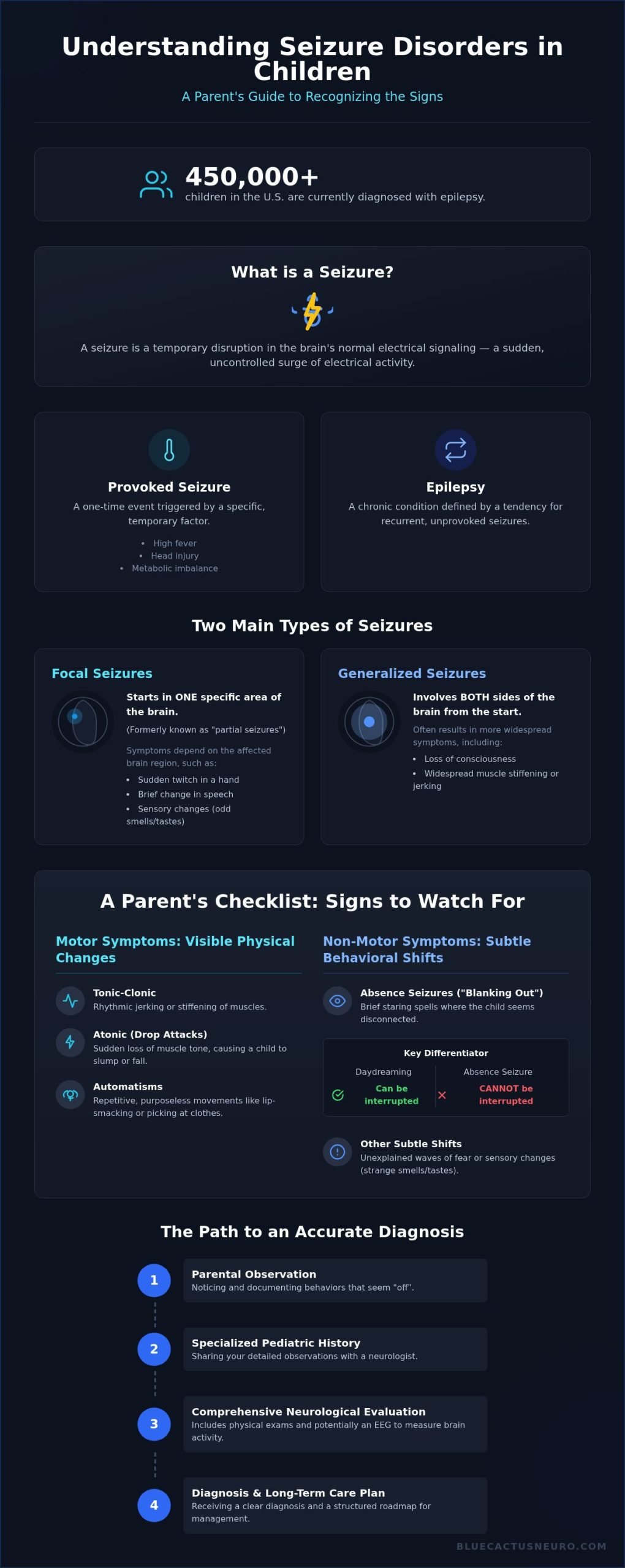
It’s vital to distinguish between a single “provoked” seizure and epilepsy. A provoked seizure is a one-time event triggered by a specific, temporary factor like a high fever or a recent head injury. Epilepsy, on the other hand, is characterized by a tendency toward recurrent, unprovoked seizures. Because the young brain is still forming its pathways, early intervention is essential. Addressing these disruptions early helps protect long-term neurodevelopmental health and ensures your child hits their milestones without unnecessary delays.
Focal vs. Generalized Seizures: What Part of the Brain is Involved?
Neurologists categorize seizures based on where the electrical surge begins. Focal seizures start in one specific area of the brain. They might only affect the functions controlled by that region, such as a sudden twitch in a hand or a brief change in speech. In modern neurology, we’ve moved away from the term “partial seizures” to “focal seizures” to more accurately describe this localized activity. Conversely, generalized seizures involve both sides of the brain from the very beginning. These often result in a loss of consciousness or more widespread physical symptoms. Pediatric seizures often look different than adult seizures because the immature brain hasn’t yet developed the circuitry to spread electrical activity in the same way, making symptoms appear more subtle or fragmented.
The Spectrum of Epilepsy Syndromes in Childhood
Many parents find clarity when we look beyond individual seizures to identify an epilepsy syndrome. An epilepsy syndrome is defined as a cluster of features that occur together, including the specific seizure type, the age of onset, and distinct patterns on an EEG. Some syndromes are age-specific, such as West Syndrome in infants or Lennox-Gastaut Syndrome in school-aged children. These conditions are often influenced by genetics or the physical structure of the brain. For families exploring Epilepsy in children, recognizing these patterns is a key part of the diagnostic journey. It allows us to move past general observations and create a highly specialized management plan tailored to your child’s unique neurological profile.
Signs of Seizure Disorders: A Checklist for Parents
Identifying a seizure disorder in children often begins with a parent’s intuition. You might notice something that feels slightly “off” before you see a clear medical symptom. Because pediatric brain activity is so dynamic, events don’t always follow the textbook patterns seen in adults. Many families worry about missing the Signs of a seizure because they expect a specific type of event, but a seizure disorder in children can manifest in ways that are easily mistaken for typical childhood quirks or behavioral issues. Using a structured checklist helps you document what you see so you can provide your doctor with a clear picture of your child’s experience.
Motor Symptoms: Visible Physical Changes
Motor symptoms are the most recognizable red flags. They involve involuntary muscle movements that can vary significantly in intensity:
- Rhythmic jerking or stiffening: Known as Tonic-Clonic activity, this involves the muscles tensing and then jerking rhythmically.
- Sudden loss of muscle tone: Often called “drop attacks” or Atonic seizures, these cause a child to unexpectedly slump or fall to the ground.
- Automatisms: These are repetitive, purposeless movements like lip-smacking, picking at clothes, or rubbing hands together.
Non-Motor Symptoms: Subtle Behavioral Shifts
Non-motor symptoms are often the most difficult to spot, leading to the “daydreaming trap.” Absence seizures look like brief staring spells where the child seems to be “blanking out.” You can tell if your child is just distracted or having a seizure by attempting to interrupt them. If they cannot be “snapped out” of the episode by calling their name or a gentle touch, it’s a sign of neurological activity. Other subtle shifts include sudden, unexplained waves of fear or sensory changes, like a strange smell or taste that isn’t really there.
The Postictal State: What Happens After a Seizure?
What happens after the event is just as telling as the event itself. This recovery period, known as the postictal state, often involves deep fatigue, confusion, or a headache. In children, this phase can last anywhere from a few minutes to several hours. If you notice these patterns, it’s helpful to track the frequency and duration. If you’re feeling uncertain about these episodes, consulting with a specialist in seizure diagnosis and management can provide the clarity your family needs. Safety is the priority during this time; stay calm, ensure the child is in a safe position on their side, and provide gentle reassurance as they regain alertness.
Common Triggers and Causes of Pediatric Seizures
Every child’s brain has a specific “seizure threshold,” which is the level of stimulation required to provoke an abnormal electrical event. For those living with a seizure disorder in children, this threshold is naturally lower, making the brain more sensitive to internal and external stressors. Identifying these triggers doesn’t just provide clinical answers; it empowers parents to create a safer, more predictable environment. While some causes are structural or genetic, others are related to lifestyle factors that families can manage with the right information.
Research from the National Institute of Neurological Disorders and Stroke provides deep insight into the Common Triggers and Causes of Pediatric Seizures, emphasizing that these events are rarely random. Sleep deprivation is one of the most potent triggers, as it disrupts the brain’s ability to regulate its own electrical activity. Similarly, high fevers in younger children can lead to febrile seizures, which occur when the developing brain reacts to a rapid rise in body temperature. In adolescents, emotional stress or hormonal shifts can also play a significant role in lowering the seizure threshold. For a deeper understanding of what causes seizures in children, including how specialists distinguish between temporary triggers and underlying neurological conditions, our parent’s guide walks through each factor in detail.
Environmental Triggers: The Arizona Context
Families in Scottsdale and the greater Phoenix area face unique environmental challenges that can impact neurological stability. The extreme summer heat often leads to rapid dehydration, which places significant stress on a child’s nervous system. Electrolyte imbalances from dehydration can trigger electrical instability in the brain, potentially leading to an event. Maintaining a cool environment and prioritizing consistent hydration are essential protective measures for local families managing a seizure disorder in children.
Neurological Factors: HIE, TBI, and Developmental Disorders
In many cases, the root cause is linked to the brain’s physical history or structure. Conditions like Hypoxic Ischemic Encephalopathy (HIE), where a baby’s brain receives insufficient oxygen during birth, can lead to long-term neurological changes. Similarly, a previous concussion or traumatic brain injury (TBI) can create small areas of scar tissue, known as seizure foci, where abnormal electrical activity begins. We also see a higher prevalence of seizures in children with co-occurring developmental conditions such as Autism Spectrum Disorder or Cerebral Palsy. Understanding these underlying links is a critical part of the diagnostic process, allowing for a more targeted and effective management plan.
When these neurological symptoms are accompanied by developmental concerns, specialized centers like Pand Health can offer comprehensive evaluations for autism and thought disorders to help families understand the full picture of their child’s health.
The Path to Diagnosis: Navigating the Neurological Evaluation
The journey toward a definitive diagnosis can feel overwhelming, but it’s a structured process designed to provide your family with concrete answers. A specialized pediatric neurologist is essential for identifying a seizure disorder in children because they possess the expertise to distinguish between normal developmental behaviors and true neurological events. This evaluation begins with a comprehensive clinical history and physical exam, where every detail you provide helps build a clearer picture of your child’s health. For Arizona families navigating this process, our childhood epilepsy diagnosis guide for Arizona parents offers a detailed walkthrough of what to expect at each stage of evaluation.
Following the initial consultation, diagnostic testing provides a window into the brain’s function. An Electroencephalogram (EEG) measures the electrical activity of the brain through small sensors placed on the scalp. It looks for the specific electrical surges that characterize seizures. In some cases, an MRI might be necessary to examine the brain’s physical structure and identify any abnormalities that could be causing the episodes. Once all data is gathered, your neurologist will interpret these results to establish a tailored management plan. If you’re ready to begin this process, you can schedule a seizure diagnosis and management evaluation to get the expert guidance your child deserves.
The Seizure Diary: How Parents Can Help the Neurologist
Your role as an observer is one of the most powerful tools in the diagnostic toolkit. Keeping a detailed seizure diary helps the neurologist identify patterns that might not be visible during a short office visit. You should record the duration of the event, the time of day, and any preceding activities like missed meals or lack of sleep. While written notes are helpful, capturing an episode on video using your smartphone is often the “gold standard” for diagnosis. It allows the specialist to see the physical manifestations and subtle movements firsthand, which is often more informative than any verbal description.
Preparing Your Child for an EEG
An EEG is a painless and non-invasive procedure, but the equipment can be intimidating for a young child. You can prepare them by explaining the electrodes as “special stickers” that listen to the brain’s activity. Many neurologists request a sleep-deprived EEG because abnormal electrical activity is more likely to appear when the brain is fatigued. To ensure the appointment goes smoothly, bring a favorite stuffed animal or a familiar blanket to keep your child comfortable. Having a quiet activity ready, such as a favorite book or a tablet, can help them stay still while the electrodes are being placed.
Specialized Seizure Management at Blue Cactus Neurology
Managing a seizure disorder in children requires a delicate balance of clinical precision and compassionate support. At Blue Cactus Neurology, we move away from the impersonal feel of large institutional hospitals to provide a patient-centered environment in Scottsdale. Dr. Ramzy Medaa leads our practice with a specialized focus on pediatric-only neurology, ensuring that every child receives the dedicated attention they deserve. We believe that effective care is a collaborative effort between the medical team and the family, built on a foundation of trust and clear communication.
Our approach to treatment is never a “one size fits all” solution. Dr. Medaa’s expertise extends to managing complex cases, including children with Hypoxic Ischemic Encephalopathy (HIE) or those recovering from a Traumatic Brain Injury (TBI). While medication is often a necessary component of care, we look beyond the prescription pad to create a comprehensive management plan. This involves identifying specific lifestyle triggers, monitoring developmental milestones, and adjusting strategies as your child grows. Because the young brain is constantly changing, long-term follow-up is vital to ensure that treatment remains effective. We prioritize the well-being of the entire family unit, aiming for the best possible neurodevelopmental outcomes, which is why we often suggest therapeutic resources like Katy Teen & Family Counseling to help families navigate the emotional stress of a chronic diagnosis.
A Partner for Arizona Families
Choosing a private practice means your family isn’t just another number in a database. We serve the greater Phoenix area with a commitment to being an accessible local advocate for your child’s health. This advocacy extends beyond our office walls. We frequently coordinate with local Scottsdale and Phoenix schools to provide the necessary medical guidance for IEP or 504 plans. Ensuring that teachers and school staff understand your child’s specific needs is a critical part of chronic management, providing a necessary safety net during the school day. Our goal is to make specialized care feel approachable and deeply integrated into your community.
Taking the Next Step for Your Child’s Health
If you’ve been “watching and waiting” or feeling anxious about unusual behaviors, it’s often time to move toward a professional evaluation. Early intervention is the most effective way to protect your child’s developing brain and provide your family with much-needed peace of mind. Our Scottsdale office is designed to be a reassuring, child-friendly space where complex neurological evaluations are conducted with gentleness and patience. You don’t have to navigate this journey alone. Schedule a consultation with Blue Cactus Neurology today to partner with a specialist who is deeply invested in your child’s long-term success.
Empowering Your Family with Clinical Clarity
Understanding the nuances of a seizure disorder in children is the first step toward reclaiming a sense of control and safety for your family. By recognizing subtle behavioral shifts and tracking specific triggers, you bridge the vital gap between home observations and a professional diagnosis. Whether your child is experiencing brief staring spells or more visible motor symptoms, having a structured framework for evaluation ensures that no detail is overlooked. Specialized care offers more than just answers; it provides a roadmap for long-term developmental health.
At Blue Cactus Neurology, Dr. Ramzy Medaa provides compassionate, outpatient care tailored specifically to the needs of Scottsdale and Phoenix families. Our practice offers deep expertise in complex seizure management and developmental disorders, ensuring your child receives the highest standard of specialized training in a reassuring environment. If you’re ready to move from uncertainty to action, we invite you to Request a Pediatric Neurological Evaluation in Scottsdale today. You don’t have to navigate these challenges alone; with the right partner, your child can continue to thrive and reach their full potential.
Frequently Asked Questions
Is a seizure disorder the same as epilepsy?
The terms are often used interchangeably in a clinical setting to describe recurrent neurological events. Epilepsy specifically refers to a condition where a child has a tendency toward unprovoked seizures. While a single event triggered by a high fever isn’t considered epilepsy, a chronic seizure disorder in children involves a pattern of electrical activity that requires long-term management and specialized neurological oversight to ensure developmental safety.
Can a child outgrow a seizure disorder?
Many children do outgrow certain types of epilepsy as their brains mature and neural pathways stabilize. This is particularly common with specific syndromes like childhood absence epilepsy or benign rolandic epilepsy. However, the likelihood depends on the underlying cause and the specific seizure type. Regular follow-ups with a pediatric neurologist are essential to monitor brain activity and determine if it’s safe to eventually taper medications.
What should I do if my child has a seizure for the first time?
Stay calm and place your child on their side on a soft surface to keep their airway clear. Don’t put anything in their mouth or try to restrain their movements during the episode. It’s helpful to time the event and observe the physical symptoms closely. While most seizures end on their own, any first-time seizure disorder in children requires a prompt medical evaluation to rule out underlying triggers.
Are seizures in children always an emergency?
Not every seizure is a medical emergency, but specific situations require an immediate call to 911. You should seek emergency care if the seizure lasts longer than five minutes, if the child has difficulty breathing, or if one seizure follows another without a return to consciousness. For children with a known diagnosis, your neurologist will help you create a specific rescue plan for managing non-emergency events safely at home.
How do I tell the difference between a seizure and a “staring spell”?
The key difference is whether you can interrupt the behavior with external stimulation. A child who is simply daydreaming will usually respond to their name or a gentle touch on the shoulder. During an absence seizure, the child is temporarily unresponsive and cannot be “snapped out” of the state. These episodes typically start and end abruptly, often lasting only a few seconds without the child realizing anything happened.
Can vaccinations cause seizure disorders in children?
Current medical research does not support a link between vaccinations and the development of chronic neurological conditions. Some children may experience a brief febrile seizure following a vaccination due to a temporary, normal rise in body temperature. These are considered provoked events and don’t indicate that the child has epilepsy. These incidents are generally isolated and don’t lead to long-term developmental issues or recurring seizures.
What are the most common medications for pediatric seizures?
Treatment is highly individualized, but common medications include Ethosuximide, Levetiracetam, and Valproic acid. In 2026, the drug Ethosuximide is projected to account for 51.7% of the childhood absence epilepsy treatment market. The choice of medication depends on the specific seizure type, the child’s age, and potential side effects. The goal is always to achieve maximum seizure control with the fewest possible disruptions to your child’s daily life.
How does Blue Cactus Neurology handle new patient evaluations in Scottsdale?
Our evaluation process begins with an unhurried, thorough review of your child’s medical history and current symptoms. Dr. Medaa conducts a detailed neurological exam in our child-friendly Scottsdale office to assess motor skills, coordination, and sensory responses. We prioritize a patient-centered approach, ensuring parents have ample time to ask questions and discuss concerns before we move forward with any necessary diagnostic testing or long-term treatment planning.