You’ve spent another evening watching your child struggle with a simple task, feeling a familiar mix of frustration and worry. You aren’t alone in wondering if these challenges are just typical childhood hurdles or signs of something deeper. With approximately 11.4% of children in the U.S. now receiving an ADHD diagnosis, many families in our community are asking the same questions. Finding reliable ADHD testing for kids Scottsdale is the first step toward replacing that daily anxiety with a clear, medical understanding of how your child’s brain works.
We understand that the path from noticing a struggle to securing support often feels overwhelming. You deserve a roadmap that simplifies the medical jargon and outlines the specific resources available right here in Arizona. In this guide, you’ll learn how to choose the right specialist, what to expect during a comprehensive evaluation, and how to leverage tools like the Arizona ESA program or an IEP to support your child’s education. We will provide the professional strategy you need to help your child thrive both at home and in the classroom, giving your family the peace of mind you’ve been searching for.
Key Takeaways
- Understand that a clinical diagnosis requires a comprehensive, multi-modal evaluation rather than a simple symptom checklist.
- Discover why a pediatric neurologist is uniquely qualified to perform ADHD testing for kids by ruling out co-occurring conditions like seizures or tics.
- Learn how to prepare for your child’s clinical interview by gathering developmental history and teacher observations for a more accurate assessment.
- Gain clarity on the differences between 504 Plans and IEPs, and how a medical diagnosis helps you access Arizona ESA funding for specialized education.
- Find peace of mind through a personalized, unhurried care model that focuses on the long-term well-being of the entire family unit.
Understanding ADHD Testing for Kids: More Than Just a Checklist
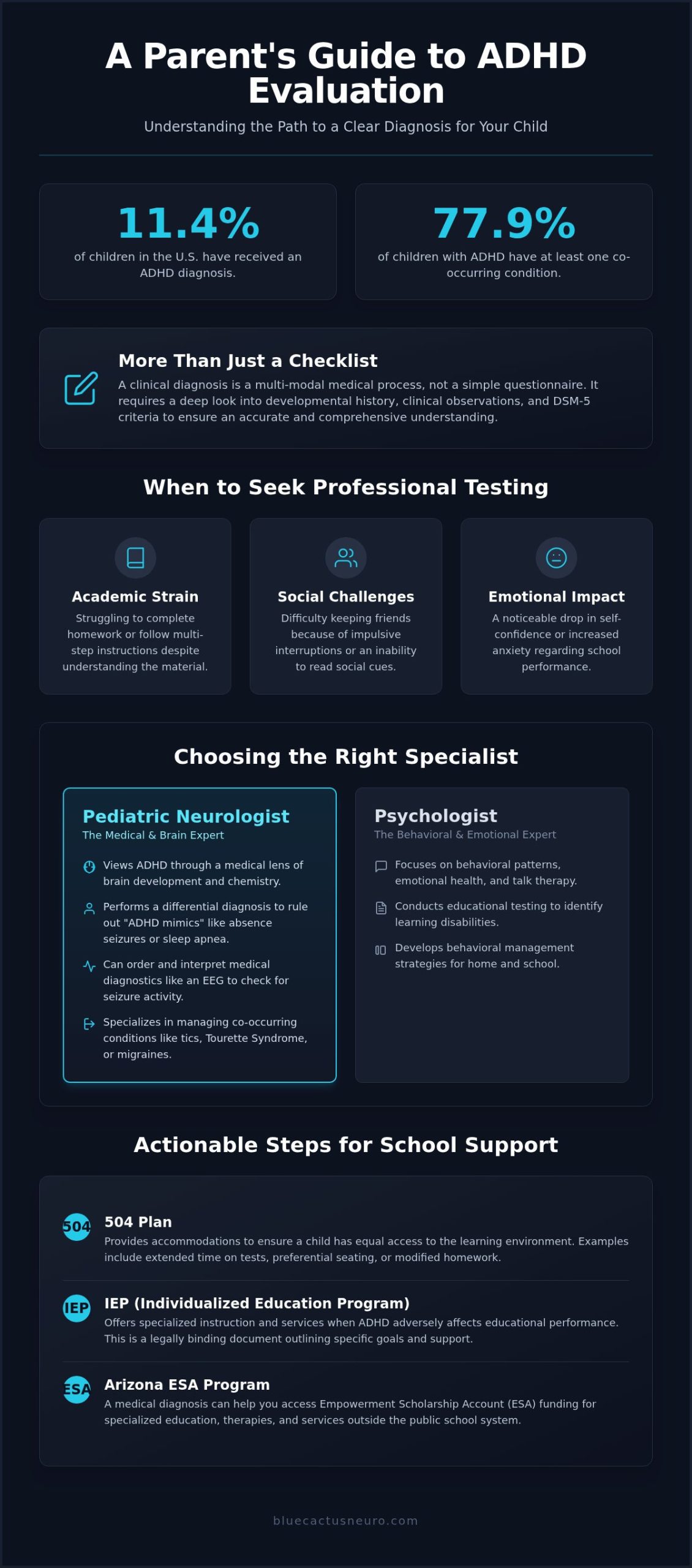
Many parents begin their journey by filling out a basic questionnaire from a teacher or an online screening tool. While these are useful starting points, they aren’t enough for a medical diagnosis. A comprehensive evaluation is a multi-modal medical process. It requires a deep look into a child’s developmental history, clinical observations, and the application of DSM-5 criteria. This structured approach ensures that the diagnosis is accurate and accounts for the 77.9% of children who have at least one other co-occurring condition. Families in our community are increasingly seeking specialized neurological testing to move beyond surface-level observations and find the biological "why" behind their child’s struggles.
The Biological Basis of ADHD
ADHD is a neurodevelopmental disorder, not a lack of willpower or a result of poor parenting. It’s rooted in the brain’s executive function system, which governs how we plan, focus, and manage impulses. At a chemical level, ADHD involves the regulation of neurotransmitters like dopamine and norepinephrine. These chemicals act as messengers that help the brain’s prefrontal cortex communicate effectively. When these pathways are less active, a child may struggle to filter out distractions or resist immediate impulses. Understanding these neurological roots helps shift the perspective from seeing a "difficult" child to supporting a child whose brain processes information differently.
When to Seek Professional Testing
It can be difficult to distinguish between typical childhood exuberance and a medical condition. You should consider professional ADHD testing for kids when behaviors consistently interfere with daily life. This isn’t just about high energy; it’s about the impact on a child’s overall development. Look for these specific indicators:
- Academic Strain: Struggling to complete homework or follow multi-step instructions despite understanding the material.
- Social Challenges: Difficulty keeping friends because of impulsive interruptions or an inability to read social cues.
- Emotional Impact: A noticeable drop in self-confidence or increased anxiety regarding school performance.
Early intervention is a powerful tool. Identifying the biological basis of these struggles allows for a customized care plan that supports long-term success. Addressing these needs early prevents the cycle of frustration that often leads to social withdrawal or academic burnout. By the time many parents reach out for testing, their child has already begun to feel the weight of these challenges. Taking action now provides a roadmap for the future.
Neurologist vs. Psychologist: Choosing the Right Specialist
When you start looking for ADHD testing for kids, you’ll likely find two main paths: a psychologist or a pediatric neurologist. While both can provide a diagnosis, they view your child’s struggles through different lenses. A psychologist typically focuses on behavioral patterns, emotional health, and educational testing. In contrast, a pediatric neurologist approaches ADHD as a medical condition involving brain development and chemistry. This medical perspective is often the missing piece for parents who want to understand the "why" behind their child’s behavior rather than just managing the symptoms.
A significant advantage of choosing a neurologist is the ability to perform a differential diagnosis. Some medical conditions can look exactly like ADHD to the untrained eye. For instance, absence seizures, sleep apnea, or even certain types of migraines can cause a child to appear "spaced out" or inattentive. By following a thorough ADHD diagnosis process, a medical specialist can rule out these "ADHD mimics." This ensures that your child isn’t misdiagnosed when an underlying neurological issue is the true culprit. If you’re looking for this level of medical certainty, consulting with a specialist who understands the pediatric brain is a vital first step.
As part of this process, it is also beneficial to consider a comprehensive vision screening; clinics like The Eye Centre provide specialized pediatric eye exams that can help rule out visual strain as a cause of inattentiveness.
The Neurological Advantage
Neurologists bring specialized tools to the table that aren’t available in a typical behavioral health setting. If your child shows signs of other neurological issues, a neurologist can order medical diagnostics like an EEG to check for seizure activity. They also specialize in managing comorbid conditions. Since nearly 78% of children with ADHD have at least one other condition, having a doctor who can simultaneously treat tics, Tourette Syndrome, or chronic headaches is incredibly valuable. This holistic medical approach ensures that all aspects of your child’s neurological health are addressed in one cohesive care plan.
Questions to Ask Your Potential Specialist
Finding the right partner for your child’s journey requires asking the right questions. You want a specialist who is deeply invested in the Scottsdale community and understands the local landscape. Consider asking these questions during your initial inquiry:
- How much of your practice is dedicated specifically to pediatric neurodevelopment?
- What is your approach to long-term clinical management after the initial testing?
- Are you familiar with the specific documentation requirements for Scottsdale Unified School District or local private schools?
Ideally, medical and psychological evaluations should work together. A neurologist provides the biological diagnosis and medical management, while a psychologist can offer behavioral therapy and detailed learning assessments. This collaborative effort creates a 360-degree support system for your child, ensuring they have the medical, emotional, and educational tools they need to succeed.
How-to Navigate the ADHD Evaluation Day in Phoenix
Walking into a clinic for your child’s evaluation shouldn’t feel like a high-stakes exam for you or your child. Instead, think of it as a collaborative consultation where every observation you’ve made at home serves as a vital piece of the puzzle. The goal of ADHD testing for kids is to move beyond simple "yes or no" answers to build a comprehensive profile of your child’s unique neurological landscape. By preparing for the specific steps of the day, you can help ensure the specialist has the clearest possible picture of your child’s daily experience.
Step 1: The Comprehensive Intake
The evaluation begins with a detailed clinical interview. This is your opportunity to discuss developmental milestones, family medical history, and specific areas where your child struggles. We look at data from multiple environments because ADHD symptoms often manifest differently at home than they do in a structured classroom. You’ll want to bring any teacher observations or previous school reports to this meeting. Standardized rating scales, such as the Vanderbilt or Conners assessments, are typically reviewed here to quantify the frequency and severity of behaviors compared to peers in the same age group.
Step 2: Clinical Observation and Medical Exam
Unlike a general behavioral screening, a pediatric neurologist performs a physical neurological exam to assess overall brain health. During the visit, the specialist is quietly observing your child’s behavioral cues, such as their ability to maintain eye contact, follow multi-step verbal instructions, or remain seated. This step is crucial for identifying comorbid concerns like motor tics or chronic headaches, which often overlap with ADHD. This unhurried observation allows the doctor to see how your child processes information and responds to a new environment in real-time.
Step 3: Analyzing the Data for a Diagnosis
Once the clinical interview and physical exam are complete, the specialist synthesizes the teacher reports, parent observations, and clinical findings. This data determines which specific subtype of ADHD is present. A diagnosis is determined when a child meets the specific DSM-5 clinical criteria for either predominantly inattentive, predominantly hyperactive-impulsive, or a combined presentation, based on persistent patterns that interfere with functioning or development.
The day concludes with a feedback session where you’ll discuss the results and immediate next steps. This conversation often covers the medical management of symptoms and how to secure school support and IEPs for your child. You’ll leave the office not just with a diagnosis, but with a concrete plan to help your child navigate their social and academic world with confidence. This roadmap is the foundation for long-term success and peace of mind for your entire family.
Actionable Steps for School Support: IEPs and Arizona ESA
Receiving a formal diagnosis is a powerful turning point for your family. It transforms vague concerns into a medical reality that schools are legally required to recognize. For many parents, the primary goal of ADHD testing for kids is to secure the specific classroom supports their child needs to succeed. A pediatric neurologist’s report serves as the essential bridge between a clinical setting and an academic environment, providing the objective data necessary to initiate school-based services.
Securing a 504 Plan or IEP
Once you have a clinical diagnosis, you can request an evaluation from the Scottsdale Unified School District (SUSD) or your child’s private school. Most children with ADHD qualify for support under the "Other Health Impairment" (OHI) category. You’ll generally choose between two types of plans. A 504 Plan provides classroom accommodations, such as preferred seating near the teacher or extended time on tests, to remove barriers to learning. An Individualized Education Program (IEP) is more comprehensive, offering specialized instruction tailored to your child’s unique needs. The detailed written report from your neurologist is vital during these eligibility meetings. It provides the school team with a clear understanding of how your child’s brain processes information and what specific interventions will be most effective.
Arizona-Specific Resources for Parents
Arizona offers unique financial and educational resources that many parents aren’t aware of. The Arizona Empowerment Scholarship Account (ESA) program is a significant asset. All K-12 students in the state are eligible, and there are no income requirements. While a general-education student receives approximately $7,000 per year, students with a documented disability through an IEP or 504 plan can receive significantly higher funding, often ranging from $10,000 to over $40,000. These funds can be used for private school tuition, specialized tutoring, or even neurological care. The application processing time is typically 4 to 6 weeks, making it a relatively fast way to access support.
When working with local schools, keep the legal timelines in mind. A public school agency has 15 school days to respond to your written request for an evaluation. Once you provide consent, the initial special education evaluation must be completed within 60 calendar days. If your child is found eligible, the initial IEP team meeting must occur within 30 days. Having a clear medical roadmap makes this entire process much smoother. If you’re ready to secure the documentation your child needs for these programs, schedule a comprehensive evaluation to start the process. Clear clinical data is the best tool you have to advocate for your child’s future.
Compassionate ADHD Care at Blue Cactus Neurology
Dr. Ramzy Medaa founded Blue Cactus Neurology with a specific vision: to provide a medical home where families feel heard and children receive the highest standard of specialized care. In a healthcare environment that often feels rushed, our private practice offers an unhurried, patient-centered atmosphere. We believe that **ADHD testing for kids **should be a comprehensive experience that looks at the whole child, not just a list of symptoms. This personalized attention allows us to build deep clinical insights that larger, institutional practices might overlook.
Our expertise is particularly valuable for children with complex neurodevelopmental profiles. While some centers focus only on behavioral traits, we specialize in the intersection of ADHD and other neurological conditions. If your child struggles with ADHD alongside seizures or Autism Spectrum Disorder, our medical-first approach ensures that every facet of their brain health is managed under one roof. We are dedicated local advocates for our community, and our goal is to turn clinical data into life-changing outcomes for your family.
A Medical Home for Your Child’s Neurology Needs
The diagnostic visit is just the beginning of our partnership. Once we establish a clear diagnosis, we provide ongoing management to monitor your child’s progress and adjust their care plan as they grow. We take the lead in coordinating care with your child’s pediatrician and school therapists, ensuring everyone is aligned on the same goals. This collaborative model prevents gaps in care and provides a steady, reliable resource for your child’s brain health throughout their developmental journey. We’re here to help you adjust strategies as academic and social demands change over time.
Next Steps: Booking Your Evaluation
Preparing for your first visit is simple and designed to be stress-free. We recommend gathering any previous school evaluations, teacher notes, or medical records that highlight your child’s specific challenges. When you arrive at our Scottsdale office, you’ll find a calm environment designed to put both you and your child at ease. Our diagnostic process is thorough but gentle, focusing on building a relationship of trust from the very first meeting. We prioritize your child’s comfort to ensure the most accurate clinical observations possible.
If you’re ready to move toward a clearer future for your child, the next step is a simple one. We invite you to Schedule a pediatric ADHD evaluation with Blue Cactus Neurology today. Let’s work together to provide the clinical clarity and compassionate support your child deserves.
Empowering Your Child’s Future with Clinical Clarity
Navigating your child’s developmental journey doesn’t have to feel like a series of unanswered questions. By choosing a medical-first approach, you gain the biological clarity needed to understand how your child’s brain processes information. A comprehensive evaluation ensures that look-alike conditions are ruled out while providing the specific documentation required for school accommodations and Arizona ESA funding. Securing ADHD testing for kids is the essential first step toward replacing daily frustration with a structured, professional plan for success.
At Blue Cactus Neurology, board-certified pediatric neurologist Dr. Ramzy Medaa provides specialized care for complex neurodevelopmental cases in a compassionate, unhurried environment. Our private practice is conveniently located in Scottsdale to serve families across the Greater Phoenix area. We invite you to Request an ADHD Evaluation for Your Child and start building a roadmap for their long-term well-being. You have the power to change your child’s trajectory, and we’re here to partner with you every step of the way.
Frequently Asked Questions
How long does an ADHD evaluation take for a child?
A comprehensive ADHD evaluation typically requires a clinical visit lasting between 60 and 90 minutes. This provides enough time for a thorough developmental history and a physical neurological exam. However, the entire diagnostic process extends beyond the office visit. It involves the specialist synthesizing teacher reports and standardized rating scales. At our practice, we prioritize an unhurried approach to ensure every clinical detail is considered before providing a final diagnosis for your child.
Can a pediatrician diagnose ADHD, or do I need a specialist?
While many pediatricians can provide a basic diagnosis, a specialist like a pediatric neurologist offers a deeper medical perspective. Specialists are trained to perform a differential diagnosis, which rules out medical conditions that mimic ADHD symptoms. If your child has complex needs or co-occurring issues like sleep disorders or tics, a specialist is essential. This higher level of expertise ensures that the diagnosis is accurate and that the treatment plan addresses the biological root of the struggle.
What is the difference between ADHD and ADD?
ADD is an older clinical term that is no longer used in the current DSM-5 diagnostic criteria. Today, all these symptoms fall under the umbrella of ADHD, which is categorized into three subtypes. These include Predominantly Inattentive, Predominantly Hyperactive-Impulsive, and Combined presentation. What was once called ADD is now officially diagnosed as ADHD, Predominantly Inattentive. Understanding these specific subtypes helps us tailor a care plan that addresses your child’s unique behavioral and academic needs.
Will my child need to be medicated after an ADHD diagnosis?
Medication is never a mandatory requirement following a diagnosis. The decision to use medication is a collaborative choice between the family and the medical specialist. Many families successfully manage symptoms through a combination of behavioral therapy, school accommodations, and lifestyle adjustments. Our goal is to provide you with all the clinical information necessary to make an informed decision. We focus on the well-being of the family unit and support whatever path feels right for your child’s development.
Because ADHD is often hereditary, parents may also benefit from professional support; those interested in adult-specific care can learn more about Collins Psychology and their evidence-based therapy programs.
Does insurance cover ADHD testing for kids in Arizona?
Most major insurance providers in Arizona cover ADHD testing for kids Scottsdale when it is deemed medically necessary. However, coverage levels and out of pocket costs vary significantly between different plans. It’s always best to contact your insurance company directly to verify your specific benefits for a neurological evaluation. Our office can provide the necessary clinical documentation to help you navigate the authorization process and ensure your child receives the specialized care they deserve.
How do I know if my child’s focus issues are neurological or behavioral?
Distinguishing between neurological and behavioral issues is exactly why professional testing is so important. ADHD is a neurodevelopmental disorder rooted in brain chemistry and executive function. Behavioral issues are often the visible symptom of an underlying neurological struggle. A pediatric neurologist uses clinical observations and medical history to determine if the focus issues are biological in nature. This clarity helps shift the focus from discipline to effective medical and educational support for your child’s specific brain type.
What age is best to test a child for ADHD?
Most specialists recommend testing around age six or seven, as this is when academic demands begin to highlight executive function struggles. While symptoms can be noticed as early as age four, a diagnosis is often more accurate once a child is in a structured school environment. Testing at this stage allows for early intervention, which is crucial for long-term academic success. If symptoms are severe and impacting safety or social development, an earlier evaluation may be appropriate for your family.
How can a neurologist help if my child also has tics or headaches?
A pediatric neurologist is uniquely qualified to manage ADHD alongside comorbid conditions like tics or chronic migraines. Since nearly 78% of children with ADHD have at least one other condition, an integrated medical approach is vital. We can manage the medications and therapies for both issues simultaneously, ensuring that treatments for one don’t negatively impact the other. This comprehensive care provides a more stable and predictable outcome for children dealing with multiple neurological challenges at once.